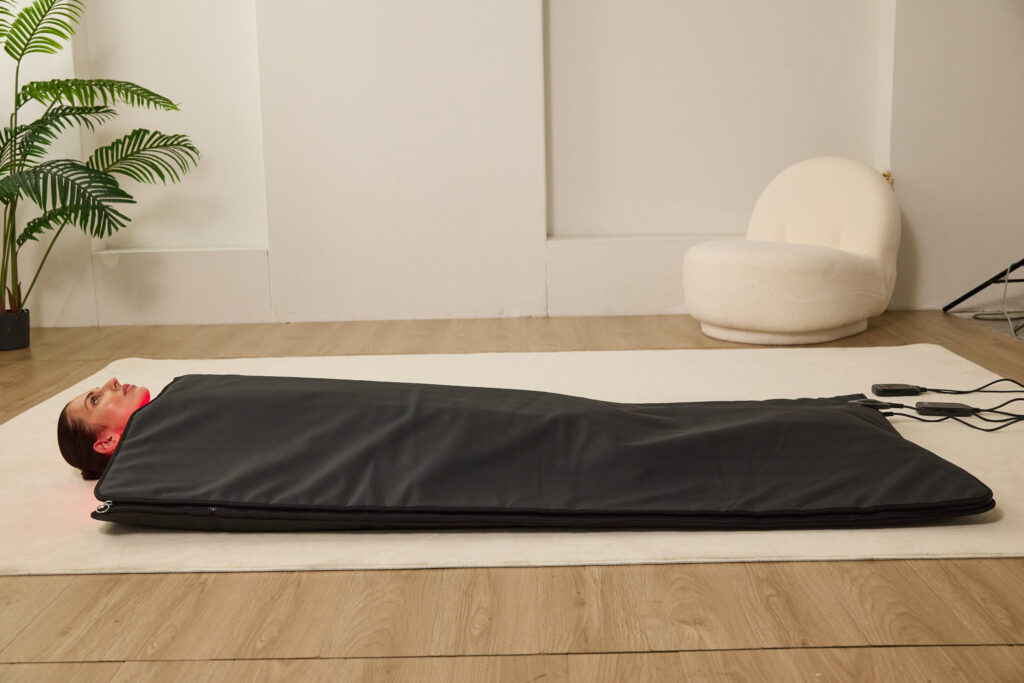
Minimum order quantity, or MOQ, is often the first obstacle a new wellness brand meets when sourcing a sauna blanket. A factory may quote one number for a standard model and another for the same product with a custom color, controller, or retail box. Those numbers reflect different production commitments. Understanding what drives them lets you test a product without buying more inventory than your market can support.
This guide explains the usual MOQ tiers, what to check in samples, and how to compare a small trial order with a larger wholesale run. It also gives you a practical way to ask for a quote that accounts for your target market, branding needs, and launch plan.
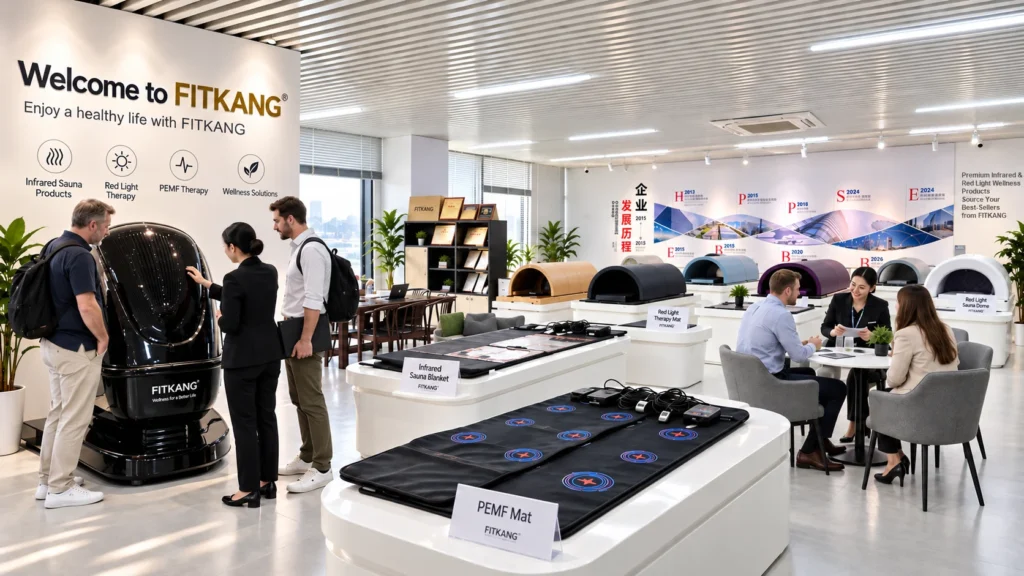
How factory sauna blanket MOQs are set
An MOQ is the smallest quantity a supplier will accept for a defined specification and price. It is not necessarily the smallest quantity the factory can physically make. Material purchases, setup time, print runs, testing, and production scheduling all affect the threshold.
Standard stock or existing model
An existing design with standard materials and packaging is usually the easiest route for a small launch. The factory may already have components or finished inventory available. Ask whether the quoted model is actually in stock, whether it uses the plug required in your destination market, and whether every unit in the order has the same controller and specifications. A low opening quantity has little value if the product cannot be sold in your market.
Custom logo and private label
A logo on the blanket, carry bag, manual, or box adds a separate setup decision. The minimum for one printed component may differ from the minimum for the finished blanket. A factory may be able to produce a small branded batch using its standard construction while charging a setup fee or using simpler packaging. Request a line-item quote so you can see which branding choice raises the wholesale sauna blanket minimum order.
Custom colors, packaging, and engineering
A new exterior color can require a dedicated material purchase. A fully printed retail box has its own print quantity. Changes to the heating layout, controller, dimensions, or wiring require engineering validation and an approved pre-production sample. Full OEM projects therefore need a specification-specific MOQ and lead time. Do not assume that a logo trial quantity also applies to a new product design.
Test samples before committing to inventory
For an established platform, ask whether the factory can supply one or two evaluation units. A trial order infrared sauna blanket should be assessed as a real product, not just a sales photograph. Confirm the exact sample specification and whether the final production unit will use the same bill of materials.
Check heat-up behavior, temperature consistency across the usable area, controller and timer operation, zipper and seam quality, surface feel, odor when heated, and cleaning instructions. Review the plug type, rated voltage, labeling, user manual, and model-specific test documents for the destination market. Ask what overheat protection the design uses and what tests are performed before shipment. Document your findings and have the supplier record any agreed changes in the approved sample.
Testing cannot prove that every future batch will perform identically. It does, however, expose obvious fit, usability, and compliance questions before you pay for a larger run. For buyers planning a private label launch, it also creates a concrete reference for packaging artwork and product photography.
What changes between 20 and 500 units?
A 20-unit pilot and a 500-unit replenishment order solve different problems. The pilot tests demand, customer feedback, and the sales channel. A larger order can spread setup charges across more units and may qualify for lower component or assembly pricing. The exact price break depends on the configuration and the factory’s cost structure; it should be quoted, not guessed.
Freight needs the same discipline. For a small batch, courier or air freight may be quicker and simpler despite a high cost per unit. At larger volumes, consolidated ocean freight may lower freight cost per unit, but destination handling, customs, inland transport, duties, and storage still apply. Ocean freight is not automatically cheaper for every order size or deadline. Compare delivered cost, not factory unit price alone.
For example, calculate each scenario as: product price plus branding and setup charges plus inspection and testing plus freight, duties, and destination fees, divided by sellable units. Then model returns, marketplace fees, and warranty support before deciding whether a lower factory price improves your margin. A pilot is worthwhile when it buys useful market evidence and limits unsold stock. Scale when repeat demand and cash flow justify the next production commitment.
Sauna blanket MOQ breakdown matrix
The matrix below is a sourcing framework, not a published FITKANG price list. MOQs depend on model, materials, artwork, destination market, and current production schedule.
|
Product type |
Sample MOQ |
Custom branding MOQ |
Full OEM MOQ |
|
Standard existing sauna blanket |
Ask for 1–2 evaluation units |
Ask for a quote if adding a logo or branded insert |
Not applicable unless specifications change |
|
Existing model with private label |
Ask for an approved logo or packaging sample |
Quoted by logo method, component, and packaging choice |
Not applicable if construction is unchanged |
|
Custom color, controller, dimensions, or heating design |
Prototype quantity quoted after requirements review |
Included in project quotation |
Quoted after material, tooling, testing, and production review |
If a supplier describes itself as a low MOQ sauna blanket factory, ask what the offer actually includes. Is it an unbranded stock unit, a logo on an existing product, or a fully customized blanket? Confirm the unit price at the trial quantity and at your projected reorder quantity. Also ask whether setup fees or sample charges can be credited against a later purchase order; treat that as a negotiated term, not an automatic entitlement.
Build a purchase path you can scale
Start with the market requirements: country, plug and voltage, target retail price, channel, estimated first order, and intended brand treatment. Request a standard sample where available. After evaluation, freeze the specifications and approve a pre-production sample if artwork or components change. Place the first production order at a quantity you can sell and support. Use its actual defect rate, customer feedback, and sell-through to plan the next run.
Review our flexible customization tiers and sampling options on our OEM/ODM Services Page. Send FITKANG your target market, preferred sauna blanket design, branding requirements, and expected trial and reorder volumes to request a configuration-specific MOQ, sample plan, lead time, and factory-direct quotation.